

Tire Installation Cost: What Drivers Should Expect
If you’re shopping for replacement tires, one of the first questions you’ll ask is simple: what is the real tire installation cost? The answer depends on more than the tire itself. Mounting, balancing, valve stem or TPMS service, disposal fees, and possible alignment work can all affect your final bill.
For drivers in and around Concord, California, the goal is usually the same: safe tires, fair pricing, and no surprises at checkout. That’s exactly why understanding installation costs before you buy matters. Whether you need a budget-friendly used tire, a full set of premium brand tires, or help choosing the right wheels and rims, knowing what goes into the price helps you make a smarter decision.
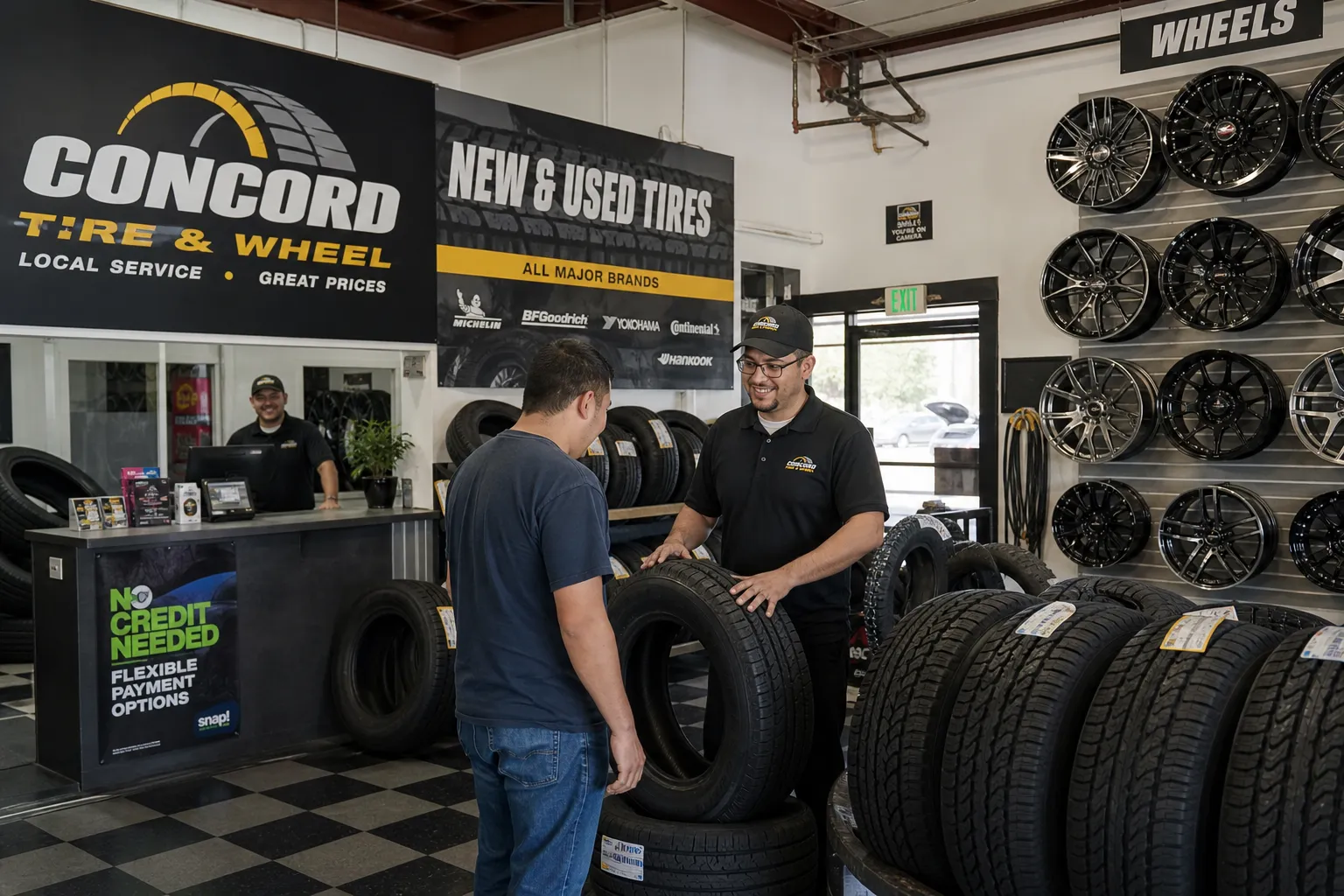
At Concord Tires & Interiors, many customers come in expecting tire prices to be the whole story. In reality, installation services are what turn a tire purchase into a safe, road-ready result. With discounted prices, access to major tire brands, new and used tire options, and a team with over 40 years of combined experience, the shop helps local drivers avoid overpaying while still getting dependable service.
What Tire Installation Cost Usually Includes
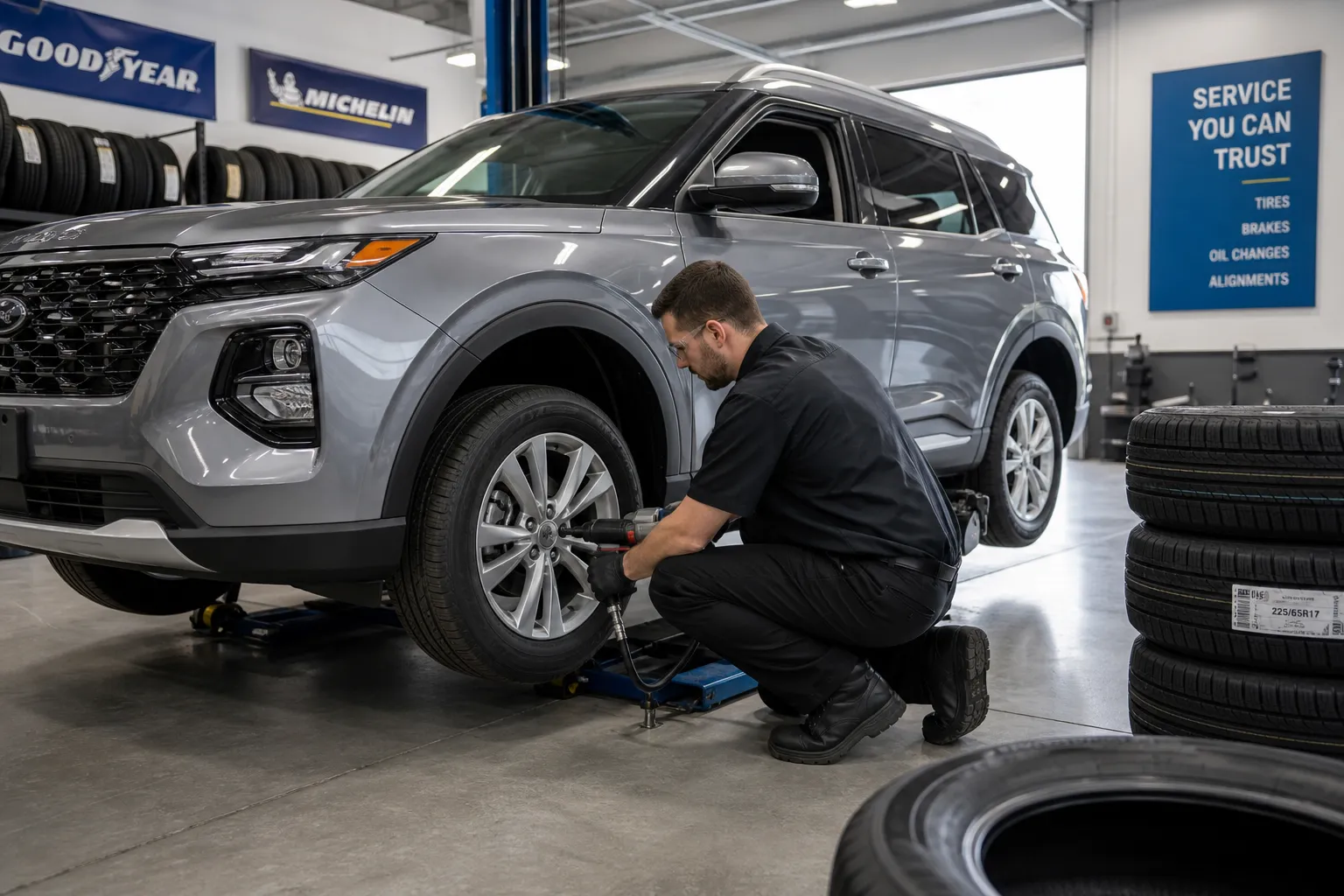
When people compare tire quotes, they often look only at the per-tire price. That can be misleading. A proper installation package may include several separate services.
Common items included in installation
-
Removing the old wheels and tires
-
Mounting the new tires onto the wheels
-
Balancing each wheel and tire assembly
-
Reinstalling wheels on the vehicle
-
Replacing or servicing valve stems or TPMS components
-
Setting proper tire pressure
-
Tire disposal or recycling fees
Some shops bundle these items into one price, while others charge individually. That is why two tire quotes can look very different even when the tire brand and size are the same.
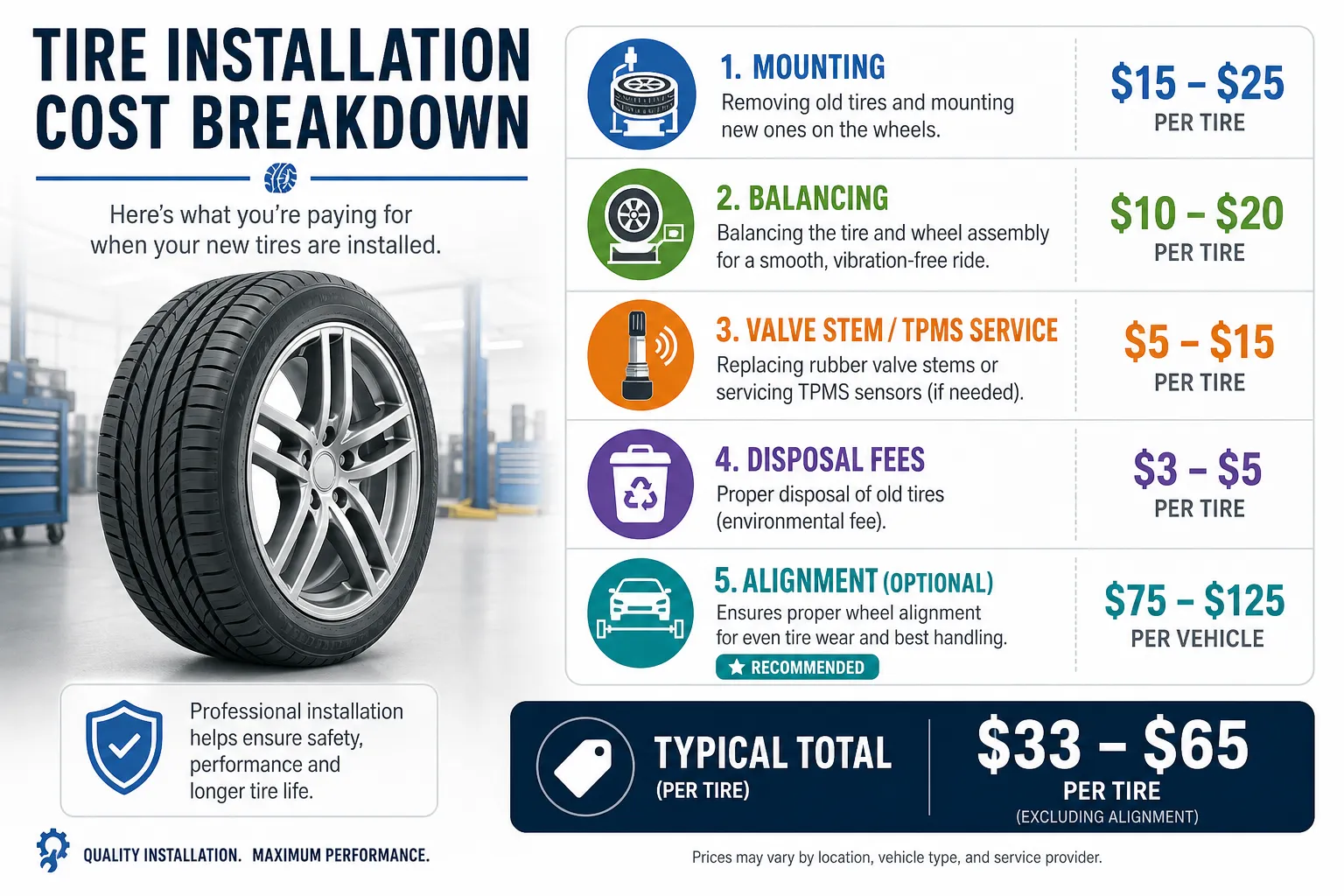
Typical price ranges
Here is a realistic look at what many drivers can expect in 2026:
|
Service Item |
Typical Cost Per Tire |
Typical Cost for 4 Tires |
|---|---|---|
|
Mounting |
$15–$25 |
$60–$100 |
|
Balancing |
$15–$25 |
$60–$100 |
|
Valve stem or TPMS service |
$5–$20 |
$20–$80 |
|
Tire disposal/recycling |
$3–$8 |
$12–$32 |
|
Road hazard protection plan |
$10–$25 |
$40–$100 |
|
Estimated basic installation total |
$150–$300+ |
These numbers can vary based on wheel size, vehicle type, low-profile tires, and whether your vehicle uses serviceable TPMS hardware.
What Makes Tire Installation More Expensive
Not every vehicle is equally easy to service. Several factors can push the price up.
1. Tire size
Larger tires usually cost more to install. Truck, SUV, and performance tires often require more labor and can be heavier or more difficult to balance.
2. Low-profile or run-flat tires
These tires can be tougher to mount without damaging the sidewall or wheel. Shops may charge more because they require extra care and sometimes specialized equipment.
3. TPMS sensor service
If your vehicle has a tire pressure monitoring system, seals, stems, or sensor components may need replacement during installation. A damaged sensor can add more cost if a full replacement is needed.
4. Wheel condition
Bent, cracked, or corroded wheels can make installation harder and can affect sealing and balance. In some cases, wheel repair or replacement may be necessary before the job is complete.
5. Disposal fees
Old tires usually need to be recycled or disposed of properly. Many shops charge a small fee for this, and it is often not included in the advertised tire price.
6. Vehicle type
Luxury cars, lifted trucks, EVs, and high-performance vehicles sometimes require special procedures, torque specs, or tire types that raise labor costs.
What a “Cheap” Tire Deal Might Leave Out
A low advertised tire price can be attractive, but it may not reflect the full out-the-door total. Some offers exclude important services that every driver still needs.
Watch for these missing costs
-
Mounting and balancing not included
-
TPMS service charged separately
-
Tire disposal fees added later
-
No road hazard protection
-
No warranty support
-
No alignment inspection
-
No after-sale customer support
This is where working with a trusted local shop matters. Concord Tires & Interiors helps drivers compare the real total cost, not just the headline number. That makes it easier to decide whether a brand-new premium tire, a discounted major-brand option, or a carefully selected used tire is the best fit for your budget.
Tire Cost vs. Installation Cost: Know the Difference
The tire itself is only one part of the invoice.
Example budget scenarios
|
Purchase Type |
Tire Cost |
Installation & Fees |
Estimated Total |
|---|---|---|---|
|
4 budget tires |
$400 |
$160–$250 |
$560–$650 |
|
4 mid-range tires |
$600 |
$180–$280 |
$780–$880 |
|
4 premium tires |
$900 |
$200–$300 |
$1,100–$1,200 |
|
2 used replacement tires |
$120–$220 |
$60–$120 |
$180–$340 |
This is why a set of tires that looks inexpensive online can still become a much larger purchase by the time installation is complete.
Is an Alignment Included?
Usually, no. Alignment is typically a separate service.
When alignment may be recommended
You may want an alignment if:
-
Your old tires show uneven wear
-
The steering wheel is off-center
-
The vehicle pulls left or right
-
You recently hit a pothole or curb
-
You are installing new tires and want to protect their lifespan
A proper alignment can help your new tires wear evenly and last longer. Skipping alignment when it is needed can shorten the life of brand-new tires, which makes the initial savings disappear quickly.
How Long Does Tire Installation Take?
For most passenger vehicles, installing four tires usually takes about 45 minutes to 2 hours, depending on shop workload and whether extra services are needed.
It may take longer if:
-
TPMS sensors need replacement
-
Wheels are damaged or corroded
-
You need an alignment
-
The shop is also rotating, repairing, or inspecting suspension components
-
You are switching specialty or oversized tires
At a customer-focused local shop, clear communication matters. Drivers appreciate knowing whether they’re waiting for a quick mount-and-balance service or a more involved tire-and-wheel appointment.
Why Professional Installation Matters
Tire installation is not just about putting rubber on rims. It directly affects ride comfort, tread wear, braking, and safety.
“Tires should be replaced after six years, regardless of the number of miles driven.” – NHTSA
That guidance matters because many drivers delay replacement based on mileage alone. Age, weather exposure, and wear patterns also matter.
A professional install helps ensure:
-
Proper bead sealing
-
Correct balancing
-
Safe torque on lug nuts
-
Accurate tire pressure
-
Reliable TPMS function
-
Better tire life and ride quality
Signs You May Need New Tires Soon
Even if you are focused on installation costs, timing your purchase wisely can save money and reduce risk.
Common warning signs
-
Tread depth is getting low
-
Cracks in the sidewall
-
Frequent loss of air pressure
-
Uneven wear patterns
-
Excessive vibration at highway speeds
-
Bulges, punctures, or repeated repairs
“Tires underinflated by 25 percent can reduce tire life by about 15,000 miles.” – U.S. Department of Energy
That’s a useful reminder that tire maintenance affects value just as much as tire selection does.
New vs. Used Tires: Which Makes More Sense?
Many local drivers are not looking for the most expensive option. They are looking for the smartest one.
New tires are often best for:
-
Long-term ownership
-
Higher annual mileage
-
Maximum warranty support
-
Best wet and dry performance
-
Drivers who want the newest tread and manufacturing date
Used tires can make sense for:
-
Tight budgets
-
Temporary replacements
-
Lower-mileage vehicles
-
Short-term ownership
-
Drivers needing a quick, affordable solution
At Concord Tires & Interiors, customers benefit from both options. That flexibility matters because not every car owner has the same budget, driving habits, or timeline. A reliable shop should help you compare options honestly rather than push you toward the most expensive set.
Choosing the Right Tire Brand Without Overspending
There are major differences in ride quality, tread life, road noise, performance, and warranty coverage between brands. Concord drivers often ask whether premium names are worth the extra cost.
Popular tire brand categories
|
Category |
Examples |
Best For |
|---|---|---|
|
Premium |
Michelin, Bridgestone, Continental, Pirelli |
Long life, refined ride, performance |
|
Mid-range |
Goodyear, Hankook, Toyo, Yokohama, Falken |
Strong value and balanced performance |
|
Budget-focused |
Varies by inventory and size |
Lowest upfront cost |
The right answer depends on your vehicle and use case. A daily commuter may value tread life and comfort, while a sport sedan owner may care more about grip and handling. An experienced local team can walk you through the tradeoffs so you do not overbuy or underbuy.
Content Gaps Most Articles Miss About Tire Installation Cost
Many articles explain average pricing, but they skip the practical questions real drivers care about. Here are the issues that deserve more attention.
The out-the-door total matters more than the advertised tire price
A cheap tire is not a bargain if installation fees erase the savings.
Used tires can be a real solution for budget-conscious drivers
Most general guides ignore used tires completely, even though they can help local drivers stay safe and mobile when cash is tight.
Warranty support has value
Manufacturer warranty support and tire protection plans can reduce future headaches, especially if you drive a lot around Bay Area freeways and city streets.
Wheels and interiors affect the buying decision too
Drivers often need more than tires. They may need upgraded wheels, rim replacement, or interior repair while the vehicle is already at the shop. Having those services in one location saves time and simplifies the experience.
Why Concord Drivers Choose Concord Tires & Interiors
Local service matters when you want honest advice and a smoother buying process. Concord Tires & Interiors stands out by combining discounted pricing, broad brand selection, and real hands-on experience.
What customers value most
-
New and used tires at competitive prices
-
Major brands in one place
-
Wheels and rims available with expert guidance
-
Tire protection plans for added peace of mind
-
Manufacturer warranty support
-
Hassle-free quotes and buying options
-
Over 40 years of combined staff expertise
-
Convenient local service in Concord, California
And because vehicle appearance matters too, customers can also take advantage of interior repair and detailing services. Promotional offers, such as discounts on interior detailing with tire purchases, make it even easier to improve both the performance and appearance of your vehicle in one visit.

How to Save Money on Tire Installation
If you want to keep costs down without cutting corners, use these strategies.
Smart ways to lower the total bill
-
Compare out-the-door quotes, not just tire prices.
-
Ask whether mounting, balancing, and disposal are included.
-
Consider quality used tires for temporary or budget needs.
-
Buy the correct tire size for your vehicle the first time.
-
Address alignment issues early to protect new tread.
-
Ask about promotions, package pricing, and protection plans.
-
Work with a local shop that explains options clearly.
Final Verdict
The average tire installation cost can vary widely, but for most drivers, the total is shaped by labor, balancing, TPMS service, disposal fees, and whether extra services like alignment are needed. Understanding those moving parts helps you avoid sticker shock and choose the best value for your vehicle.
If you are in Concord, California, and want affordable tires, wheels, and dependable service without the usual hassle, Concord Tires & Interiors is a smart place to start. With discounted new and used tire options, major brands, experienced staff, warranty support, and convenient interior detailing and repair services, the shop offers far more than just a basic tire sale. Reach out for a quote and get the right tires installed with confidence.
FAQ
How much should I pay to have a tire mounted?
For most vehicles, mounting one tire typically costs around $15 to $25, with balancing and related service adding more. Your final price can increase if the vehicle needs TPMS service, disposal, or specialty tire handling.
Is $300 for 4 tires good?
It can be a good deal if that price is for the tires alone and they are safe, correctly sized, and from a reliable source. Just remember that installation fees are usually separate, so your total out-the-door cost will often be higher.
What does a tire installation include?
A standard installation usually includes mounting the tires, balancing the assemblies, reinstalling the wheels, and setting proper air pressure. It may also include valve stem or TPMS service, but tire disposal and road hazard protection are sometimes billed separately.
How long does a tire installation usually take?
For four tires on a typical passenger vehicle, installation usually takes about 45 minutes to 2 hours. It may take longer if the shop is busy or if you also need alignment, TPMS replacement, or wheel repair.
Do you need an alignment after getting new tires installed?
Not always, but it is often recommended if your old tires showed uneven wear or the vehicle pulls to one side. An alignment helps protect your new tires and can improve handling, comfort, and tread life.