

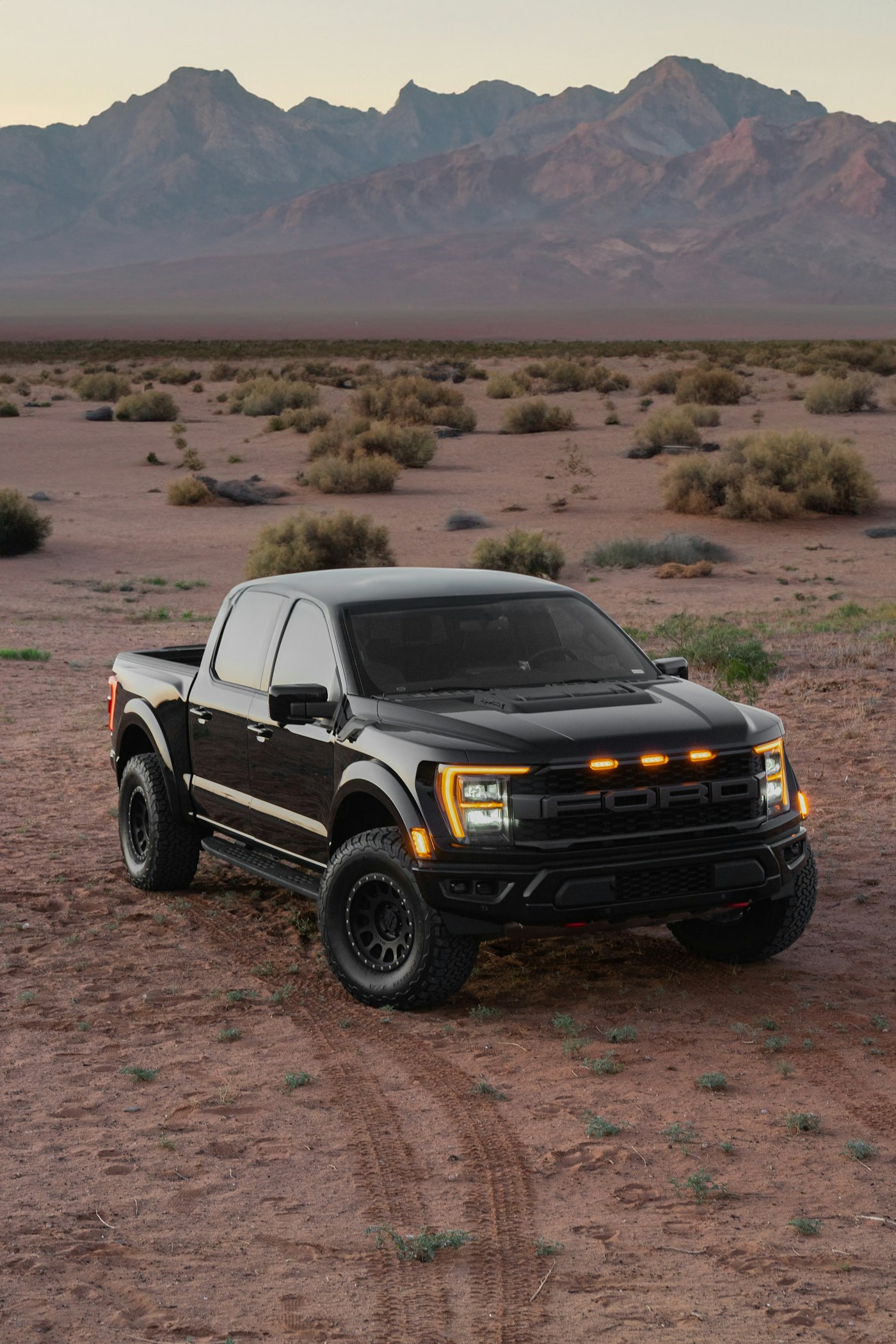
Once an F-150 has been lifted, the factory tire size chart no longer applies — sizing becomes a question of your specific suspension lift, wheel offset, and how much rubbing or clearance issue you’re willing to risk. This guide covers how to think about tire sizing on a lifted truck. For stock/OEM sizing, see our Ford F-150 Tire Guide. Call (925) 849-4321 for real-time pricing and availability — our team is here during business hours, and our AI agent can pull a real quote from current inventory anytime after hours.
Why lifted trucks don’t follow the factory size chart
A suspension lift changes the clearance available around each wheel well, and often changes wheel offset too (how far the wheel sits in or out relative to the hub). Both affect what tire diameter and width will actually clear the fenders, suspension components, and frame without rubbing — a question specific to your lift kit, wheel choice, and truck, not something a generic size chart can answer.
What actually determines your max tire size
- Lift height — the single biggest factor; more lift generally means more room for a larger-diameter tire.
- Wheel offset and backspacing — affects how far the tire sits from suspension and frame components, independent of diameter.
- Trimming or fender modifications — some lift setups require minor trimming to avoid rubbing at full steering lock or full suspension travel; this varies enough by build that we won’t guess a number here without seeing the truck.
Because these factors are specific to your exact lift kit and wheel combination, we don’t publish a generic “lifted F-150 max tire size” chart — bring your truck in to Concord Tires (or send us photos and your lift/wheel specs) and we’ll help you find the largest size that actually fits without problems. We fit lifted-truck tires near Concord, Walnut Creek, Pleasant Hill, Clayton, Martinez, and Pittsburg, including plenty of trucks built for the trails around Mount Diablo.
Tread type for a lifted truck
Most lifted F-150s pair the extra clearance with an all-terrain or mud-terrain tire to match the truck’s off-road intent — see our all-terrain tire guide for real A/T line recommendations. If you also tow or haul, make sure your chosen size and line is available in an LT load range — see our LT tire guide for towing.
What changes after going bigger
- Speedometer/odometer accuracy — a larger-diameter tire than stock changes your effective gearing, which can throw off your speedometer reading unless it’s recalibrated.
- 4WD system stress — as with stock-size replacement, keeping matched tread depth and diameter across all four wheels matters even more once you’ve changed diameter from factory spec.
- TPMS relearn — typically needed after any tire change.
- Alignment — a lift and new wheel/tire combination should be paired with a proper alignment, not just a tire swap.
FAQ
How much bigger can I go on my lifted F-150 without rubbing?
It depends entirely on your specific lift height, wheel offset, and whether any trimming has been done — there’s no single answer across all lifted F-150s. Bring us your specifics and we’ll help you find the right fit.
Do I need new wheels when I lift my F-150, or just bigger tires?
Often both — a lift frequently calls for a wheel with different offset/backspacing to clear properly, not just a larger tire on the stock wheel. We can talk through your specific setup.
Will a bigger tire throw off my speedometer?
Yes, if the new diameter differs meaningfully from stock — this is a real, common effect and worth correcting (via a tuner or gear recalibration) rather than ignoring.
Call (925) 849-4321 for real-time pricing and availability on tires for your lifted F-150. Our team is here during business hours, and our AI agent can give you a real quote from current in-house and dropship inventory anytime after hours.
This guide is provided for general informational purposes. Maximum tire size after a lift is specific to your truck’s exact lift kit, wheel offset, and any modifications — always confirm fitment for your specific build before purchasing. Concord Tires is not affiliated with Ford Motor Company or any tire manufacturer named above; all product names and trademarks belong to their respective owners and are used here for identification purposes only.