

Tire Rotation Service: Why It Matters in 2026
If you are trying to get the most life out of your tires, keep your car safe in traffic, and avoid spending money earlier than necessary, regular tire rotation deserves a place on your maintenance checklist. For drivers in Concord, California, where daily commuting, freeway heat, stop-and-go traffic, and uneven road surfaces all affect tread wear, a timely tire rotation service can make a noticeable difference in tire life, ride comfort, and overall handling.
At Concord Tires & Interiors, we regularly meet drivers who only think about their tires when they get a flat, notice vibration, or realize the tread is wearing out faster than expected. In many of those cases, uneven wear could have been reduced with a simple rotation schedule. Whether you drive a commuter sedan, family SUV, pickup, EV, or performance vehicle, understanding how tire rotation works helps you protect your investment.
Why this topic matters more in 2026
Tires are more expensive than they used to be, and many drivers are balancing maintenance budgets more carefully. At the same time, modern vehicles put unique demands on tires:
-
Heavier EVs can accelerate tire wear
-
AWD systems often need closely matched tread depths
-
Low-profile tires and larger wheels can be more sensitive to neglect
-
High-traffic local driving creates uneven wear patterns faster than many people expect
That means a basic service like tire rotation is still one of the smartest, lowest-cost ways to stretch tire life and keep your vehicle driving the way it should.
What a tire rotation service actually includes
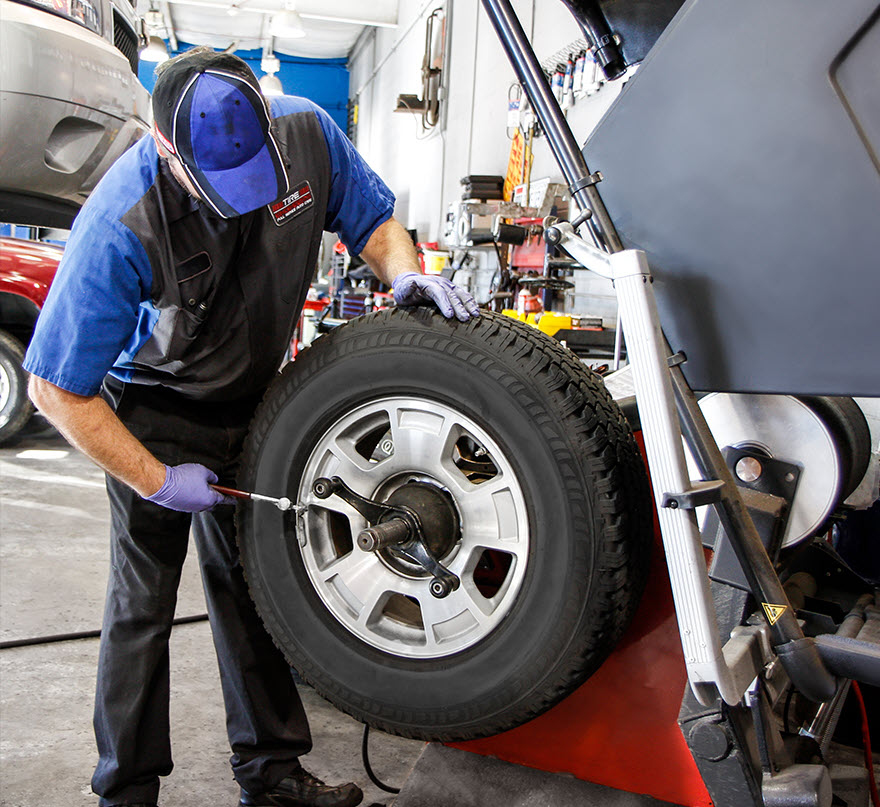
A tire rotation is the process of moving each tire from one position on the vehicle to another, based on the correct pattern for your drivetrain, tire type, and wheel setup. The goal is simple: help all four tires wear more evenly.
A professional tire rotation service often includes more than just moving the tires. At a quality shop, it should also involve:
-
Checking tread wear across all four tires
-
Inspecting for punctures, cracking, bulges, or sidewall damage
-
Verifying tire pressure
-
Confirming the correct rotation pattern
-
Checking lug torque
-
Noting signs of alignment or suspension issues
At Concord Tires & Interiors, that inspection aspect matters just as much as the rotation itself. It helps catch small problems before they turn into bigger costs.
Why tires wear unevenly in the first place
Many drivers assume all four tires wear down at the same rate. In reality, they rarely do.
Front-wheel-drive vehicles
On most front-wheel-drive cars, the front tires do more work. They handle steering, much of the braking load, and power delivery to the road. That usually means the front pair wears faster.
Rear-wheel-drive vehicles
Rear-wheel-drive vehicles often wear rear tires differently because those tires handle acceleration, while the front tires still manage steering loads.
All-wheel-drive vehicles
AWD systems distribute power to all four wheels, but that does not guarantee identical wear. Differences in suspension geometry, cornering habits, inflation, and road conditions can still create uneven tread loss.
EVs and heavier vehicles
Electric vehicles often produce instant torque and carry more weight from the battery pack. That combination can wear tires faster, especially if rotations are skipped.
Local driving conditions in Concord
Concord-area driving can be tough on tires because of:
-
Warm pavement and summer heat
-
Highway commuting
-
Frequent braking in busy corridors
-
Parking lot turns and curb approaches
-
Potholes and patched roads
All of those factors make routine rotation even more important for Bay Area drivers.
The biggest benefits of regular tire rotation
Longer tire life
This is the benefit most drivers care about first, and for good reason. Even wear helps you use more of the tread across all four tires before replacement becomes necessary.
Better handling and traction
Tires with more balanced tread depth tend to respond more predictably in dry and wet conditions. That means steadier cornering, more consistent braking, and less chance of one end of the car feeling loose or unsettled.
Smoother, quieter driving
Uneven tread often creates vibration and road noise. Rotation can help prevent those issues from developing as quickly.
Better value from your tire purchase
When you invest in good tires, you want the full benefit of that purchase. Whether you choose premium options from Michelin, Pirelli, Bridgestone, Continental, Goodyear, Hankook, Toyo, Falken, Yokohama, Firestone, or another trusted brand, regular maintenance helps you get your money’s worth.
Protection for AWD drivetrains
Vehicles with AWD or 4WD can be more sensitive to differences in tread depth. Keeping wear even helps reduce unnecessary strain on the drivetrain.
How often should you rotate your tires?
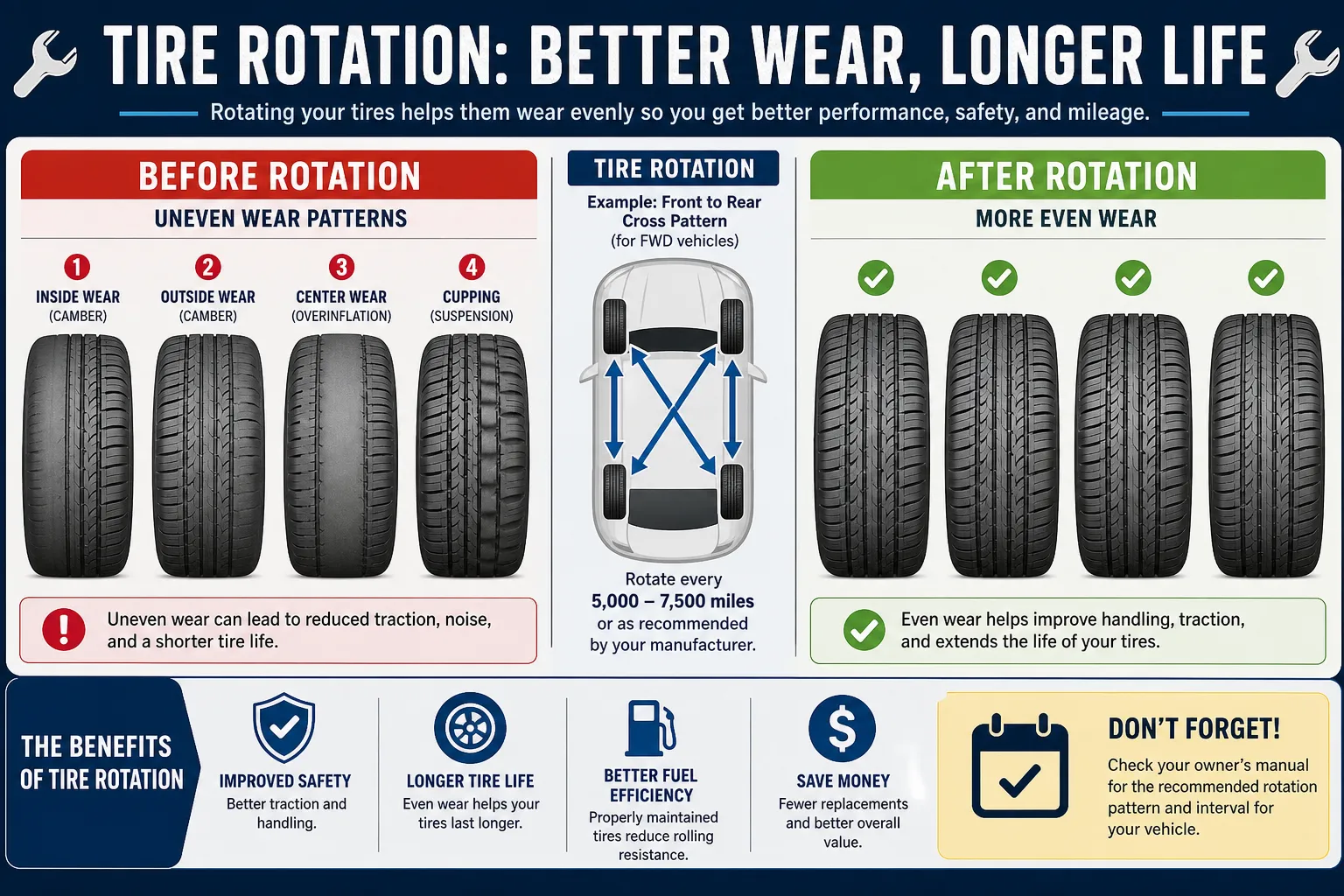
For many vehicles, a good rule of thumb is every 5,000 to 7,500 miles. For some drivers, pairing rotation with every oil change makes it easier to stay on schedule.
That said, the ideal interval depends on your vehicle and driving style.
You may need more frequent rotations if you:
-
Drive an AWD vehicle
-
Own an EV
-
Commute heavily on freeways
-
Carry heavy loads often
-
Tow regularly
-
Drive on rough roads
-
Notice fast front or rear tread wear
-
Use performance or low-profile tires
A quick reference table
|
Vehicle/Driving Type |
Typical Rotation Interval |
|---|---|
|
Standard sedan or crossover |
5,000–7,500 miles |
|
AWD vehicle |
3,000–5,000 miles in some cases |
|
EV with high torque |
5,000 miles is often wise |
|
Truck used for towing/hauling |
Around 5,000 miles |
|
Performance vehicle |
Follow manufacturer guidance closely |
If you are unsure, Concord Tires & Interiors can inspect the wear pattern and recommend a realistic schedule based on how you actually drive.
Common rotation patterns
Not every car uses the same pattern. The correct method depends on drivetrain layout, tire type, and whether the tires are directional or staggered.
Standard patterns
|
Vehicle Type |
Common Rotation Approach |
|---|---|
|
Front-wheel drive |
Front to rear on same side, rear cross to front |
|
Rear-wheel drive |
Rear to front on same side, front cross to rear |
|
AWD |
Often similar cross pattern, depending on manufacturer |
|
Directional tires |
Front to back only on the same side |
|
Staggered fitment |
May be limited or not rotatable front to rear |
This is one area where professional service matters. Rotating incorrectly can reduce the benefit or even create handling issues.
Signs your vehicle may be overdue for a tire rotation
You do not always need a mileage reminder sticker to know it is time. Your car may start telling you.
Watch for these warning signs
-
Front tires look more worn than rear tires
-
Uneven wear across the inside or outside edge
-
Vibration at certain speeds
-
More road noise than usual
-
Steering feels less stable
-
Reduced wet-weather traction
-
The vehicle pulls slightly during normal driving
If you notice these symptoms, it is smart to schedule an inspection soon. Sometimes the issue is only rotation-related. Other times, it points to alignment, balance, or suspension problems that should be addressed.
Tire rotation vs. wheel alignment vs. tire balancing
These services are often mentioned together, but they are not the same thing.
Quick comparison
|
Service |
What It Does |
Why It Matters |
|---|---|---|
|
Tire rotation |
Moves tires to new positions |
Helps tires wear evenly |
|
Wheel alignment |
Adjusts wheel angles |
Prevents pulling and edge wear |
|
Tire balancing |
Corrects weight distribution in wheel/tire assembly |
Reduces vibration and uneven wear |
Do you need all three?
Not every visit requires all three, but they often work together.
-
Rotation helps distribute wear
-
Balancing helps maintain a smooth ride
-
Alignment helps stop abnormal wear from happening again
If your tires keep wearing unevenly after rotations, alignment is often the next thing to check.
What competitors usually cover – and what they often miss
Most articles on tire rotation explain the basics: it extends tire life, improves safety, and should be done every 5,000 to 7,500 miles. That is all true. But many leave out the practical details drivers actually need.
Key content gaps we are filling here
Rotation is not one-size-fits-all anymore
Many competitors mention general intervals without explaining how EVs, AWD systems, staggered wheels, or directional tires change the picture.
Tire buying value matters
A lot of articles talk about maintenance in isolation. In the real world, rotation matters because tires are expensive. Protecting a new set of tires, or making a quality used set last longer, is a budget decision as much as a safety decision.
Local conditions matter
Advice should reflect how and where people drive. Concord drivers face different conditions than drivers in snow-heavy or rural regions, and heat plus traffic can speed up wear patterns.
Service quality matters
A tire rotation done by an experienced shop is not just a quick tire swap. It is also a chance to inspect tread, pressure, wheel condition, and related wear issues before they become a bigger expense.
When rotation alone will not solve the problem
Tire rotation is important, but it is not a magic fix.
You may need additional service if your tires show:
-
Feathering
-
Cupping
-
Severe inner-edge wear
-
Repeated pressure loss
-
Sidewall bubbles
-
Rapid wear on one corner only
Those symptoms may point to worn shocks, poor alignment, bent wheels, or underinflation. If needed, Concord Tires & Interiors can help you evaluate whether a repair, replacement, or new wheel and tire package makes the most sense.
Should you rotate new tires too?
Yes. In fact, starting early is often the best move.
New tires begin developing wear patterns right away. Rotating them on schedule from the beginning gives you the best chance of maximizing tread life and ride quality. That is especially true if you have just invested in a premium set or upgraded to a new wheel and tire combination.
What if you have directional, staggered, or performance tires?
This is where generic online advice often falls short.
Directional tires
These are designed to rotate in one direction for optimal traction and water evacuation. They usually can only move front to rear on the same side unless the tires are dismounted and remounted.
Staggered wheel setups
If your rear wheels or tires are wider than the fronts, front-to-rear rotation may not be possible. Some vehicles can only rotate side to side, and some cannot be rotated in a meaningful way at all.
Performance vehicles
Sports sedans, coupes, and modified vehicles may use fitments that require special care. If you drive one, it is best to rely on a shop that understands wheel offsets, tire sizing, and manufacturer recommendations.
Why tire brand choice and rotation strategy go hand in hand
Not all tires wear the same way. Touring tires, all-season tires, performance tires, truck tires, and EV-specific tires all behave differently under load and heat.
That is one reason Concord Tires & Interiors focuses on matching the right tire to the driver, not just the vehicle. If you are shopping for replacement tires, we can help you compare options from major brands while keeping your budget in mind. We also offer:
-
Discounted pricing on new tires and wheels
-
New and used tire options
-
Major tire brand selection
-
Tire repair support
-
Manufacturer warranty support
-
Tire protection plans
-
Hassle-free local guidance from an experienced team
With over 40 years of combined expertise, our staff helps customers avoid the common mistake of buying the wrong tire first and asking questions later.

How tire rotation supports overall vehicle value
A lot of people think about tire service as a purely mechanical issue. But there is also a resale and ownership angle.
When your tires wear evenly:
-
The vehicle feels better to drive
-
You are less likely to replace one pair early
-
You preserve consistency in ride and handling
-
You reduce the chance of premature suspension wear
-
You present a better-maintained vehicle if you sell or trade it later
For budget-conscious drivers, that matters. Small maintenance habits often separate affordable ownership from expensive surprises.
A smart maintenance routine for Concord drivers
If you want a simple system, this works well for most drivers:
-
Check tire pressure monthly
-
Inspect tread visually every few weeks
-
Rotate every 5,000 to 7,500 miles unless your vehicle needs more frequent service
-
Have alignment checked if the car pulls or the tread wears unevenly
-
Replace worn tires before safety becomes a concern
And if your vehicle also needs cosmetic care, Concord Tires & Interiors gives you the convenience of handling appearance concerns too. Beyond tires and wheels, we also provide interior repair and detailing services, making us a practical one-stop shop for drivers who want both function and presentation. Promotional savings may also be available, including discounts on interior detailing with qualifying tire purchases.

Is a tire rotation service worth it if you are on a budget?
Absolutely. In fact, it may be more important when you are trying to control costs.
A relatively low-cost rotation can help delay the much larger expense of replacing tires early. That matters whether you are driving on premium tires, looking at affordable replacement options, or considering a quality used tire solution.
For many local drivers, the question is not whether they can afford rotation. It is whether they can afford to ignore it.
Why local drivers choose Concord Tires & Interiors
Drivers around Concord want more than a generic tire shop experience. They want straightforward advice, fair pricing, and confidence that the work is being done right.
That is where Concord Tires & Interiors stands out:
-
Local convenience in Concord, California
-
Discounted prices on tires, wheels, and rims
-
Broad selection of major brands
-
New and used tire options for different budgets
-
Experienced staff with over 40 years of combined expertise
-
Tire protection plans and manufacturer warranty support
-
Tire and wheel help plus interior repair and detailing in one place
-
A hassle-free, customer-focused experience built around value
Whether you need a simple rotation, help choosing replacement tires, or a full wheel upgrade, our team is here to make the process easier.
Final thoughts
Tire rotation is one of the most practical services you can do for your vehicle in 2026. It helps your tires last longer, supports better handling, protects ride quality, and helps you get more value from every dollar you spend on maintenance. For Concord drivers dealing with everyday commuting, warm pavement, and rising ownership costs, that is a smart move.
If your tires are due for service, or if you are already noticing uneven wear, vibration, or road noise, now is the right time to act. Visit Concord Tires & Interiors for honest guidance, affordable pricing, and expert support on everything from tire rotation to new tires, wheels, and interior detailing.
FAQ
Is a tire rotation actually necessary?
Yes. A tire rotation is necessary because tires rarely wear evenly on their own, especially on front-wheel-drive, AWD, and EV models. Regular rotations help extend tire life, improve handling, and reduce the chance of replacing tires too early.
Do I really need to rotate my tires every 5000 miles?
For many vehicles, every 5,000 miles is a smart interval, especially if you drive in traffic, on hot pavement, or in an AWD or electric vehicle. Some cars can go a bit longer, but staying close to that schedule is an easy way to prevent uneven wear.
Why does BMW not recommend rotating tires?
Some BMW models use staggered tire setups, meaning the front and rear tires are different sizes, which limits or prevents normal front-to-rear rotation. In those cases, the recommendation is based on the vehicle’s wheel and tire configuration, not because tire rotation has no value.
How often does Michelin recommend tire rotation?
Michelin commonly recommends rotation at around 6,000 to 8,000 miles, though the right interval can vary by vehicle and driving conditions. For many drivers, rotating at or near each oil change keeps things simple and effective.
Should I get an alignment every time I rotate my tires?
No, an alignment is not required at every rotation. However, if your car pulls to one side, your steering feels off, or your tread is wearing unevenly, an alignment check is a very good idea.
What is better, Goodyear or Michelin?
Neither brand is universally better for every driver. Michelin and Goodyear both make strong tire options, and the better choice depends on your vehicle, driving habits, performance needs, and budget.