

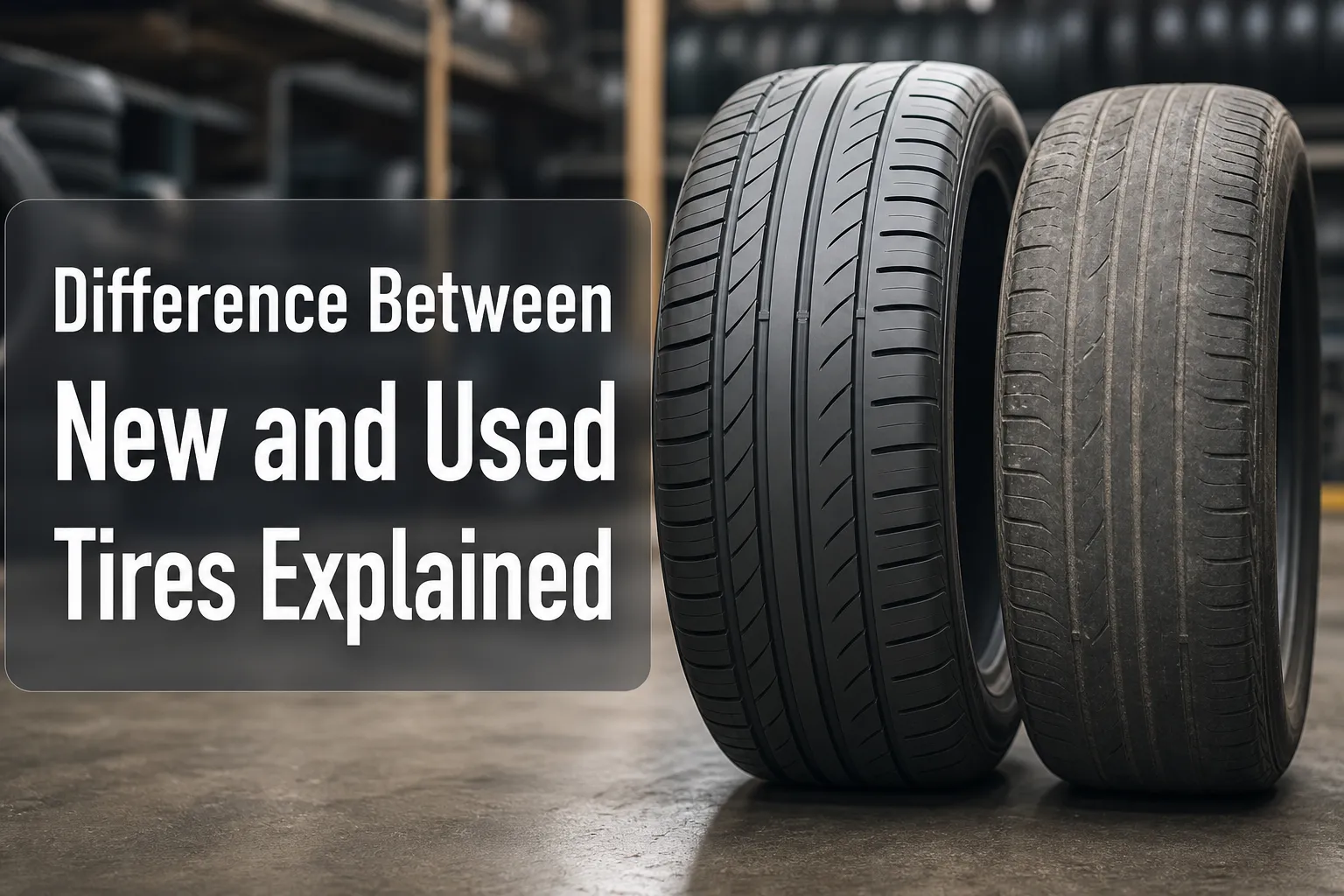
Difference Between New and Used Tires Explained
If you are comparing the difference between new and used tires, you are probably trying to balance three things at once: safety, cost, and long-term value. For many drivers in and around Concord, California, the question is not just “Which tire is cheaper today?” but “Which option makes the most sense for my car, my commute, and my budget?”
At Concord Tires in California, we help local drivers make that decision every day. Some customers need the confidence and warranty coverage of brand-new tires. Others want a carefully selected used tire option to get safely back on the road without overspending. The right answer depends on tread life, driving habits, road conditions, and how long you plan to keep the vehicle. To get a fast and free quote, call Concord Tires today at 1 (925) 849-4321
The Short Answer: What Makes New and Used Tires Different?
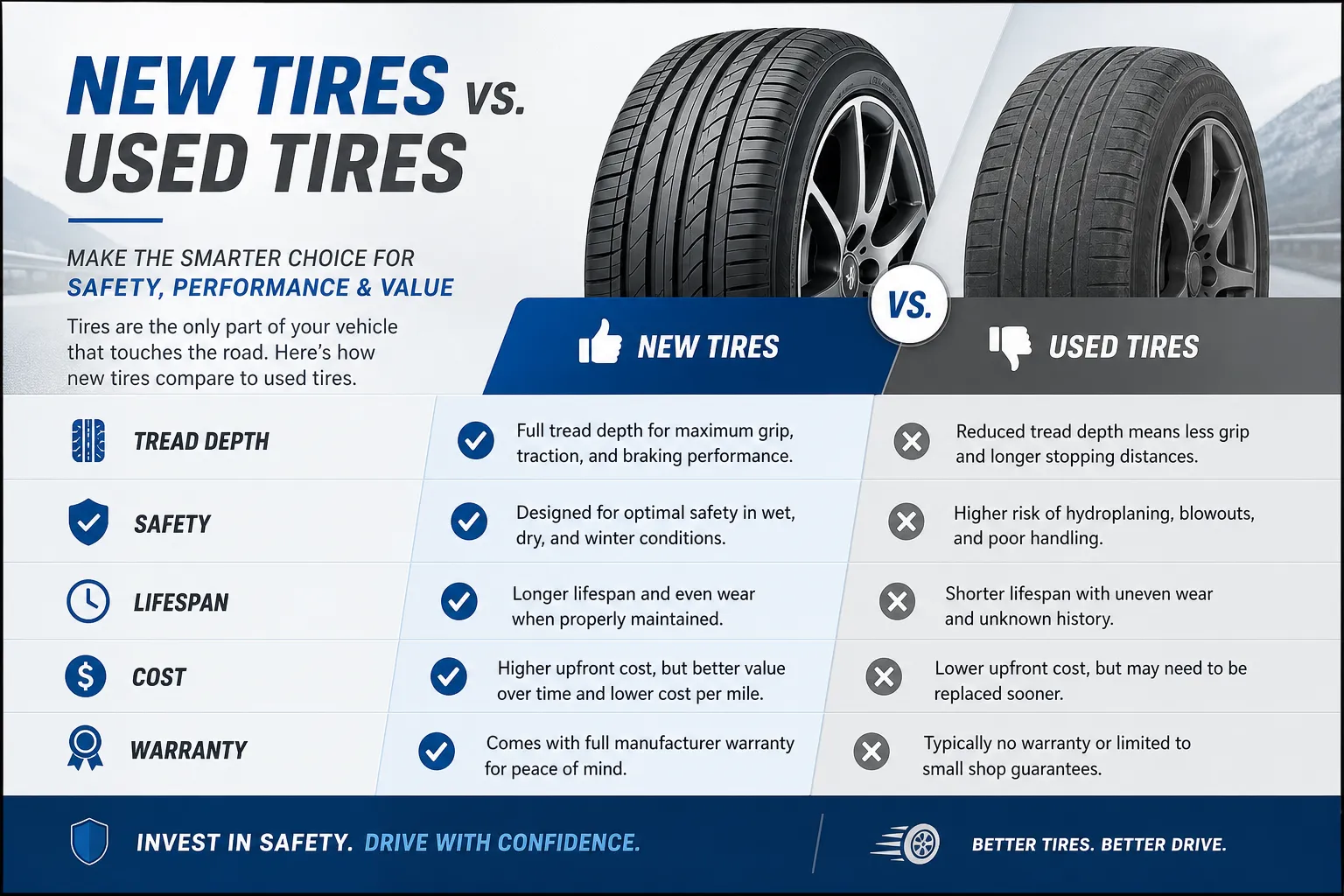
The main difference is simple: new tires give you full life, full tread, and full manufacturer-backed confidence, while used tires can lower the upfront cost but come with less remaining life and more need for careful inspection.
Here is a quick side-by-side view:
| Factor | New Tires | Used Tires |
|---|---|---|
| Tread depth | Full original tread | Partial tread remaining |
| Safety margin | Highest | Depends on condition and age |
| Wet-weather performance | Best | Can be reduced if tread is worn |
| Lifespan | Longest expected service life | Shorter remaining life |
| Warranty | Often includes manufacturer warranty | Usually limited or no manufacturer warranty |
| Upfront cost | Higher | Lower |
| Best for | Long-term value, daily commuters, families, highway driving | Budget-focused short-term needs, temporary replacements |
Why This Decision Matters More Than Most Drivers Think
Tires affect far more than ride comfort. They influence:
- Braking distance
- Cornering grip
- Hydroplaning resistance
- Fuel efficiency
- Road noise
- Overall driving confidence
That means the wrong tire choice can cost more later, even if it looks cheaper upfront. A bargain tire that wears out quickly or performs poorly in the rain may not be a bargain at all.
“Tires with 4/32 inch of tread depth can require up to 87 additional feet to stop compared to new tires.” – Consumer Reports
1. Tread Depth: The Biggest Functional Difference
Why tread depth matters
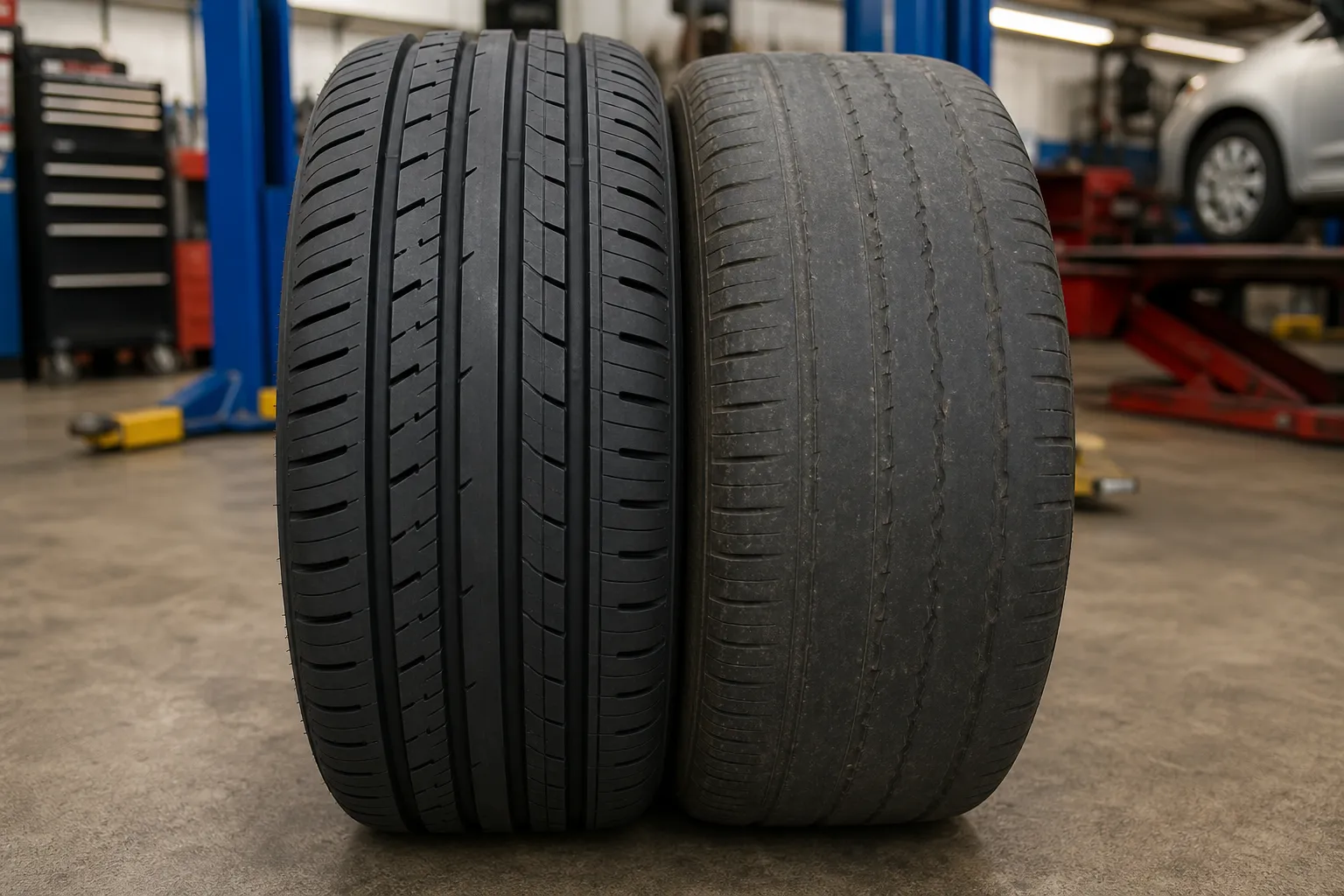
Tread is what channels water away and helps your tire hold the road. New tires start with their full engineered tread pattern. Used tires have already spent part of that performance.
That does not automatically make every used tire a bad choice. But it does mean tread depth must be checked carefully.
What new tires offer
New tires give you:
- Maximum tread depth
- Better water evacuation
- More traction in wet conditions
- Longer usable life before replacement
- More predictable handling
What used tires offer
Used tires may still be a practical option if they have:
- Strong remaining tread
- Even wear across the contact patch
- No sidewall damage
- No exposed cords
- No signs of unsafe repair history
At Concord Tires, our experienced staff helps customers avoid guessing. With over 40 years of combined expertise, we know what to look for and how to match the right tire to the right vehicle and use case.
2. Safety: Where New Tires Usually Win
Safety is where competitor articles often stay too general. The real issue is not just whether a used tire “looks okay.” It is whether the tire still has enough tread, structural integrity, and age life to perform during emergency braking or sudden lane changes.
New tire safety advantages
New tires typically provide:
- Full design performance
- Stronger wet-road grip
- Lower hydroplaning risk
- Better emergency braking response
- Clear manufacturer specifications and support
Used tire safety risks
Used tires can carry unknown history, such as:
- Previous impact damage
- Internal belt separation
- Improper inflation wear
- Uneven alignment wear
- Old age even if tread appears decent
- Low-quality patches or repairs
A tire can look acceptable from the outside and still hide problems. That is why buying used tires from an unknown seller, roadside lot, or unverified marketplace is much riskier than working with a trusted local shop.
3. Cost: Lower Upfront Price vs Better Long-Term Value
Used tires usually win on day-one price. New tires often win on cost per mile.
“The average cost for replacing a single tire in the United States ranges from $100 to $300.” – CostWhale
Upfront cost comparison
| Tire Type | Typical Price Pattern | Best For |
|---|---|---|
| New tire | Higher initial investment | Drivers keeping the car longer, heavy commuters, families |
| Used tire | Lower upfront spend | Budget emergencies, temporary replacements, short-term ownership |
The hidden cost question
A cheaper tire is not always less expensive. Ask:
- How many miles are realistically left?
- Will I need replacement sooner?
- Is wet-weather safety reduced?
- Is there warranty support?
- Will mismatched wear affect handling?
For many daily drivers in Concord, Walnut Creek, Pleasant Hill, Pittsburg, and surrounding areas, a discounted new tire can be the smartest value because it stretches farther over time.
That is one reason so many local customers come to Concord Tires. We offer discounted prices on tires and wheels, plus access to a wide selection of major brands like Michelin, Pirelli, Bridgestone, Continental, Goodyear, Hankook, Toyo, Falken, Yokohama, Firestone, and more.
4. Lifespan: How Much Life Are You Actually Buying?
New tires
When you buy new, you are purchasing:
- Full remaining service life
- Fresh rubber compound
- Maximum tread
- Better age expectancy
- Less chance of near-term replacement
Used tires
When you buy used, you are purchasing only the remaining life. That can still be worthwhile, but only if the price reflects the actual condition.
A good used tire can help in situations like:
- Replacing one damaged tire on an older vehicle
- Staying mobile during a tight budget period
- Short-term vehicle ownership
- Temporary transportation needs
But if you drive long distances, carry family passengers, or spend time on freeways and in changing weather, new tires often make more sense.
5. Performance: Dry Grip, Wet Roads, Ride Quality, and Noise
Another content gap many competitors miss is that performance is not just about tread remaining. It is also about how consistently the tire behaves.
Dry-road performance
A high-quality used tire may still perform adequately in dry conditions if it has even wear and enough rubber left. But as tread wears down, the tire gradually loses some of its original design balance.
Wet-road performance
This is where the gap becomes more noticeable. Less tread usually means:
- Reduced water evacuation
- Lower resistance to hydroplaning
- Longer wet stopping distances
- Less confidence in fast rain
Ride comfort and road noise
New tires often feel:
- Smoother
- Quieter
- More stable at highway speeds
Used tires may still ride well, but they are more likely to show uneven wear, cupping, or age-related stiffness that affects comfort.
6. Warranty and Protection: A Major Difference Buyers Overlook
This is one of the clearest advantages of new tires.
New tires often include
- Manufacturer warranty support
- Workmanship and material coverage
- Optional road hazard or tire protection plans
- Better documentation of purchase and service
Used tires may have
- Limited shop-only coverage
- No manufacturer warranty
- Reduced protection against premature issues
At Concord Tires & Interiors, we help customers understand not only the tire itself, but the support behind it. That includes manufacturer warranty support when applicable and tire protection plan options for added peace of mind.
7. When Used Tires Make Sense
Used tires are not automatically the wrong choice. They can be a sensible option in the right situation.
Good scenarios for used tires
Used tires may be appropriate when:
- You need an affordable short-term solution
- Your vehicle is older and nearing the end of its life
- You are replacing a tire temporarily before buying a full set
- You do not drive many miles
- You are working within a tight budget but still want in-person inspection and guidance
The key is buying from a reputable local tire shop that inspects inventory carefully and explains what you are getting.
8. When New Tires Are the Better Investment
New tires are usually the better fit if:
- You drive daily
- You do a lot of freeway commuting
- You transport family or kids
- You want maximum wet-weather confidence
- You plan to keep the vehicle for years
- You want warranty protection
- You care about long-term value and predictable performance
For many local drivers, the best path is not “cheapest possible.” It is best value within budget. That is exactly where our team at Concord Tires & Interiors focuses the conversation.
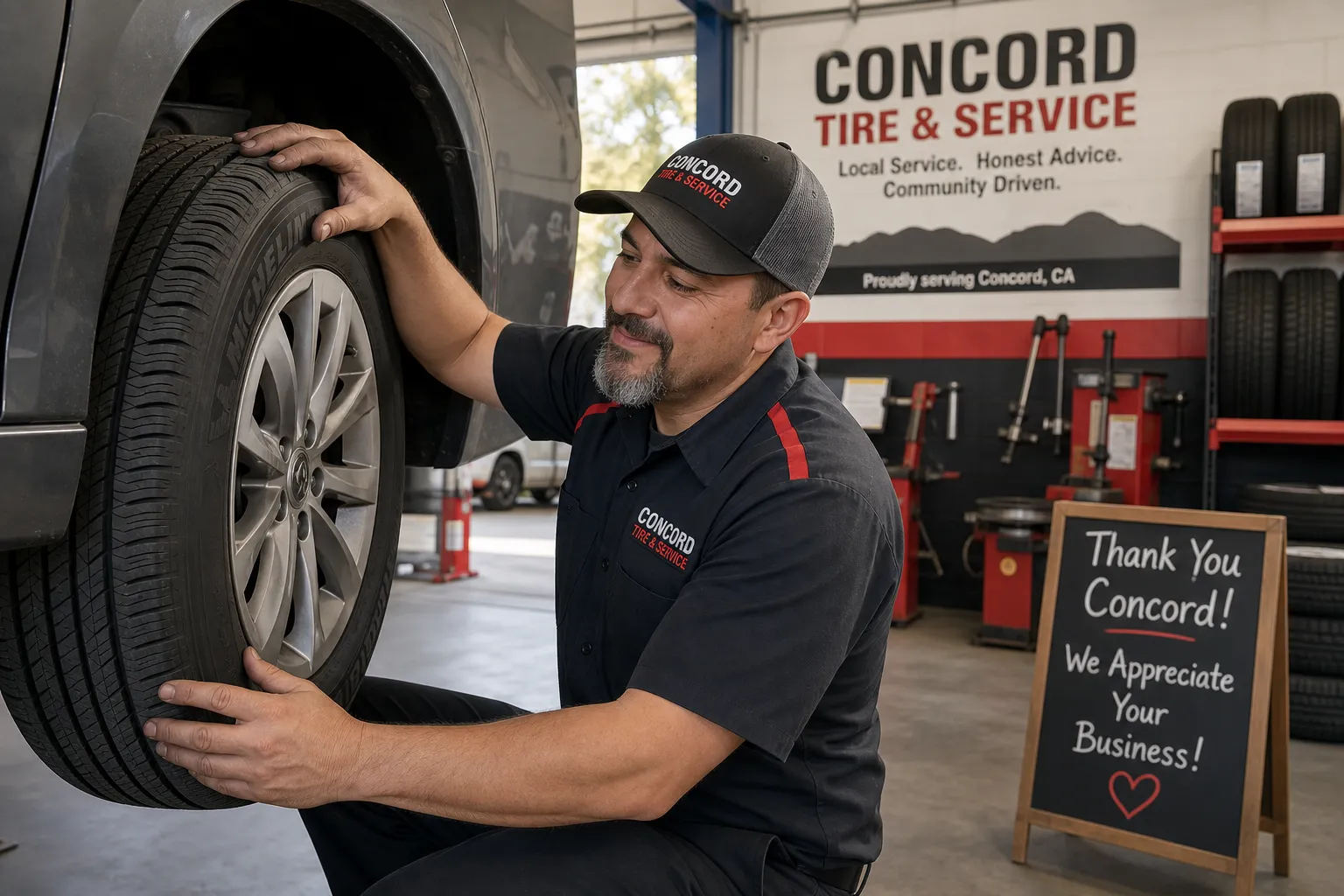
9. How to Inspect a Used Tire Before Buying
If you are considering used tires, inspect beyond appearance.
Check these first
Tread depth
Make sure there is enough tread left for safe use, especially for wet-weather driving.
Wear pattern
Avoid tires with uneven wear, feathering, or bald spots. These may point to alignment or suspension problems from the previous vehicle.
Sidewall condition
Watch for cuts, bubbles, cracking, or dry rot.
Age
Check the DOT date code. A tire with decent tread can still be too old.
Repairs
Be cautious of poor-quality patches, plugs, or multiple repairs.
Matching specs
The tire should match your vehicle’s size, load rating, and speed rating requirements.
At Concord Tires, our hassle-free process makes this easier. Instead of guessing alone, you can get help from experienced professionals who are used to comparing condition, fitment, and value.
10. New vs Used Tires by Driver Type
| Driver Type | Best Fit | Why |
|---|---|---|
| Daily commuter | New tires | Better lifespan, wet grip, and overall value |
| Family vehicle owner | New tires | Strongest safety margin |
| Budget emergency buyer | Used tires or discounted new tires | Lower immediate cost |
| Older car owner | Used tires can make sense | Avoid overinvesting in a short-term vehicle |
| Performance-minded driver | New tires | Better consistency and handling |
| Seasonal or low-mileage driver | Depends on condition and budget | Both can work if chosen carefully |
11. Wheels, Rims, and Tire Fitment Matter Too
Tire choice is only part of the picture. Proper fitment with your wheels or rims affects:
- Handling
- Tire wear
- Ride quality
- Safety
- Appearance
If you are shopping for replacement tires and also thinking about upgrading or replacing wheels, it helps to work with one shop that understands both. Concord Tires offers a broad selection of tires, wheels, and rims at outlet-style pricing, so you can solve fitment, appearance, and performance needs in one stop.
12. One Local Shop for Tires and Interior Care
Most tire stores stop at tires. We do more.
In addition to new and used tire options, Concord Tires also offers interior repair services. That means you can improve how your vehicle drives and how it looks at the same time. For local customers who value convenience, that is a major advantage.
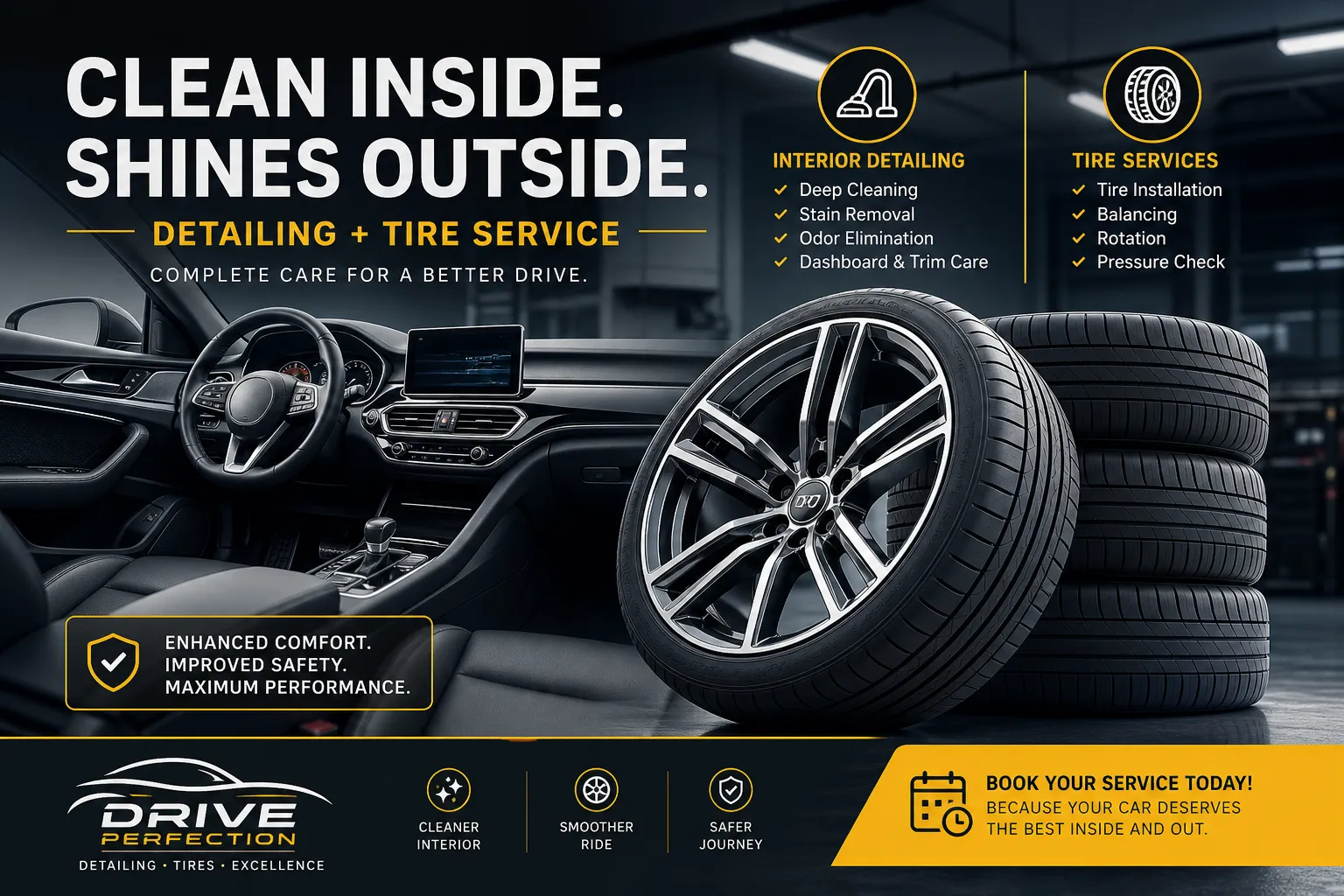
Even better, promotional offers may include discounts on interior repairs with tire purchases, giving you extra value beyond the tire sale itself.
13. Questions to Ask Before You Buy
Before choosing new or used tires, ask:
- How many miles do I drive each month?
- Do I mostly drive local streets or highways?
- Do I need maximum wet traction?
- Am I keeping this vehicle for another year or another five years?
- Is my priority lowest upfront price or lowest cost over time?
- Does this purchase include warranty or protection options?
- Am I buying from a shop that will stand behind the recommendation?
These questions often make the right answer much clearer.
Final Verdict: Which Should You Choose?
If you want the safest, longest-lasting, and most predictable option, new tires are usually the better choice. If you need a lower-cost short-term solution and buy from a trusted shop that inspects inventory carefully, used tires can still be a practical option.
The best decision depends on your car, your driving habits, and your budget. That is why a one-size-fits-all answer rarely works.
At Concord Tires, we make the process simple. You get:
- Discounted prices on tires and wheels
- Access to major tire brands
- New and used tire options
- Over 40 years of combined staff experience
- Hassle-free, customer-focused service
- Tire protection plan options
- Manufacturer warranty support
- Interior repair services
- Local convenience in Concord, California
If you are ready to compare options without pressure, contact Concord Tires for a quote today. Our team can help you find the right tire for your vehicle, your priorities, and your budget.
FAQ
What is the 3 tire rule?
The so-called 3 tire rule usually refers to replacing tires in matched sets whenever possible instead of driving on one significantly different tire. In practice, most shops recommend replacing at least two tires on the same axle, and sometimes all four, to maintain balanced handling, traction, and braking.
What is the 77 rule for tires?
The 77 rule is commonly used to describe tire age and storage caution, especially once a tire gets older even if tread remains. As a general guide, tires around 7 years old should be inspected carefully, and by around 10 years, replacement is usually strongly recommended regardless of appearance.
Can I still use a 7 year old tire?
Possibly, but only after a careful inspection for cracking, dry rot, uneven wear, repairs, and overall structural condition. Even with decent tread, an older tire may not offer the same safety margin as a newer one, especially in heat or wet conditions.
What to avoid when buying used tires?
Avoid used tires with low tread, sidewall cracks, bubbles, uneven wear, exposed cords, unknown repair history, or an old DOT date code. It is also smart to avoid buying from unverified sellers who cannot explain the tire’s condition or fitment.
What is the 77 rule for tires?
The 77 rule is a shorthand reminder that tire age matters almost as much as tread depth. A tire may still look usable, but once it reaches about 7 years old it deserves close inspection, and aging rubber can become a safety concern over time.
Are 35 or 37 tires better?
Neither is automatically better; it depends on your vehicle setup, gearing, clearance, intended use, and driving style. Thirty-fives are often easier to live with for daily driving, while 37s can offer more off-road capability but may require additional modifications and higher cost.
To get a fast and free quote, call Concord Tires today at 1 (925) 849-4321